Trustpilot
Bible Stories
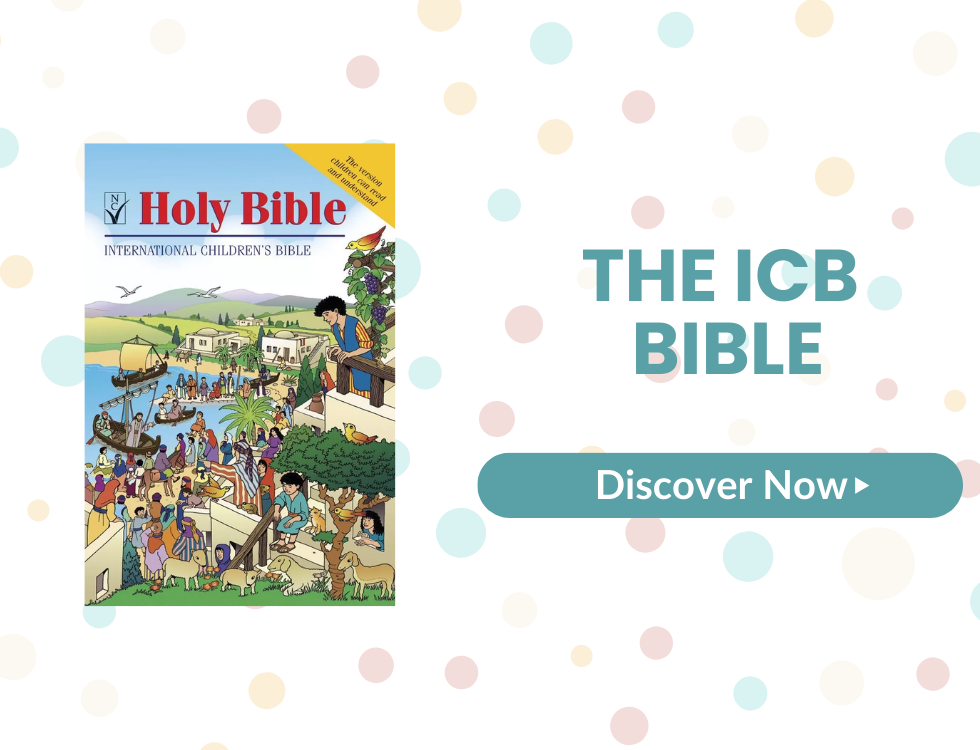
What is the History of the ICB?
Did you know the International Children's Bible started as a text for the deaf? Discover the fascinating history behind the ICB and NCV translations.

By Laura White – Eden Children's Resources Specialist
When you open an International Children’s Bible (ICB), you notice something immediately: the sentences are short, the vocabulary is simple, and the "churchy" language is gone. It reads like a book a 7-year-old would actually pick up.
But did you know that this beloved children's translation didn’t actually start as a Bible for children at all?
The history of the ICB is a fascinating journey that began with a mission to help the deaf community and evolved into one of the most trusted Bible translations for kids in the world. Here is the story behind the ICB.
1. It Started with a Bible for the Deaf (1978)
The roots of the ICB go back to 1978 in Fort Worth, Texas. The World Bible Translation Centre (WBTC) identified a significant barrier: many existing Bible translations were too complex for the deaf community. Because sign language relies on visual concepts and simple sentence structures, the complex syntax of the King James or NIV was difficult to translate or read.
To solve this, a team led by senior translator Ervin Bishop created the English Version for the Deaf (EVD). Their goal was strictly functional:
- Short sentences.
- Basic vocabulary.
- No complex clauses.
They unknowingly created the blueprint for the perfect children's Bible.
2. The Birth of the ICV (1983)
It didn't take long for publishers to realise that the features making the Bible accessible to the deaf,clarity and simplicity, were exactly what young children needed.
In 1983, the EVD was slightly modified and repackaged as the International Children’s Version (ICV). It was a hit. For the first time, children had a "real" Bible (translated from the original Greek and Hebrew) that they could read without needing an adult to explain every third word.
3. The Pivot to the New Century Version (1987)
By 1987, the project had grown. The translation team revised the text to hit a slightly higher reading standard (roughly UK Year 6). They renamed this "grown-up" version the New Century Version (NCV).
The NCV became famous for being:
- Highly readable: It retained the simple sentence structure of the deaf version.
- Progressive: In 1991, it became one of the first mainstream Bibles to use gender-neutral language (e.g., using "brothers and sisters" instead of just "brethren" where the text implied a mixed group).
4. The ICB as We Know It Today
While the NCV found a home with teenagers (often used in Youth Bibles), there was still a need for a Bible for primary school children.
The publishers took the NCV text and simplified it once again, dialing the reading age back down to a junior school level (ages 6–8). This "child-friendly" edit became the International Children's Bible (ICB) we know today.
How is the ICB different from other Children's Bibles?
The most important distinction in the history of the ICB is that it is a translation, not a storybook.
- Storybook Bibles: Retellings of stories (like Noah's Ark) written by an author. They leave out the "boring bits" like genealogies or laws.
- The ICB: A full translation of the original text. It includes every verse, chapter, and book, but translates them into vocabulary a child understands.
For example, instead of using the difficult word "Atonement," the ICB might use a phrase like "payment for sin." Instead of "sepulchre," it uses "tomb."
Summary: A Bible for "Little" Readers
From its origins aiding the deaf community to its current status as a Sunday School staple, the ICB has always had one mission: clarity.
If you are looking for a Bible that bridges the gap between picture books and "adult" translations like the NIV, the ICB is the perfect stepping stone. It respects the child's intelligence by giving them the full text, but respects their ability by making it readable.
The ICB Bible is available at Eden.