Trustpilot
Bible Stories
ICB vs. NIV: Key Differences Explained for Parents
Trying to decide between the ICB and NIV Bible? We explain the reading levels, vocabulary differences, and age recommendations to help you choose.

By Laura White – Eden Children's Resources Specialist
Choosing a Bible for your child often comes down to two main contenders: the International Children's Bible (ICB) and the New International Version (NIV).
Both are excellent, trusted translations. Both are widely used in churches. But they serve very different reading levels.
If you are trying to decide which one is right for your child, here are the key differences explained.
1. The Core Difference: Who is it for?
The simplest way to choose between them is to look at the intended audience.
- The NIV (New International Version) is an adult translation. It is written at a reading level suitable for teenagers and adults (approx. age 12+). While many "Children's NIVs" exist, they usually contain the standard adult text wrapped in a colourful cover.
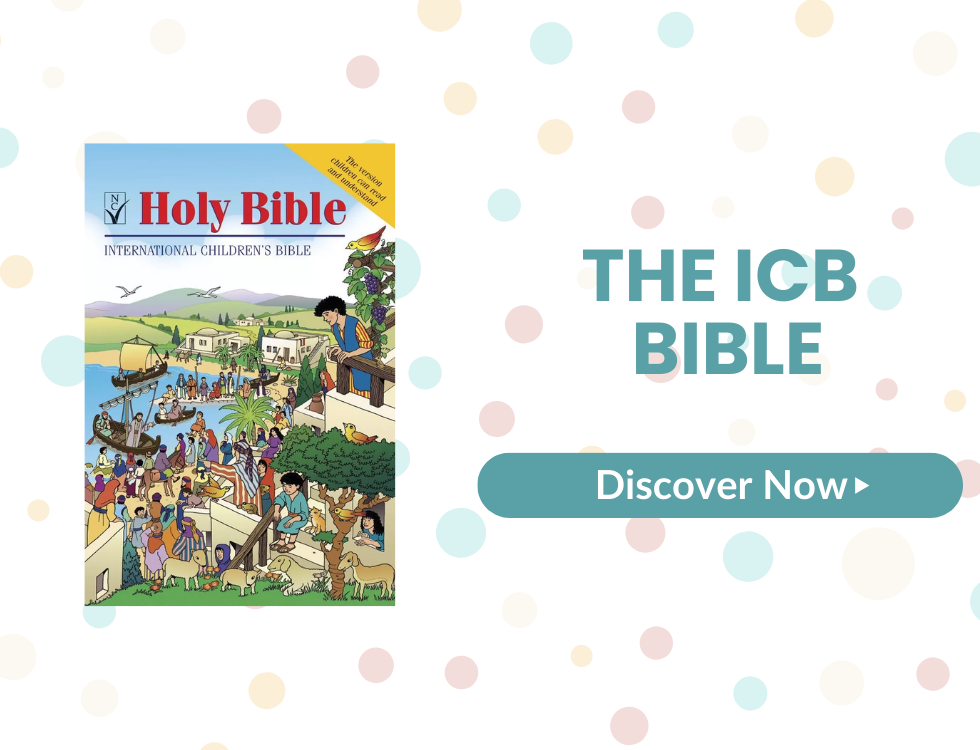
- The ICB (International Children's Bible) is a child-specific translation. It was translated from the ground up specifically for primary school children (ages 6–12). The sentence structure and vocabulary are intentionally simplified.
2. Reading Difficulty Comparison
The ICB simplifies complex grammar and theological terms that the NIV leaves intact.
Example: Psalm 23:1
- NIV: "The Lord is my shepherd, I lack nothing."
- ICB: "The Lord is my shepherd. I have everything I need."
- Difference: The phrase "I lack nothing" is abstract (a double negative concept). "I have everything I need" is concrete and easier for a child to grasp.
Example: Matthew 5:9 (The Beatitudes)
- NIV: "Blessed are the peacemakers, for they will be called children of God."
- ICB: "They are happy who make peace. God will call them his children."
- Difference: The NIV uses the traditional religious word "Blessed." The ICB translates the meaning of that word ("Happy") to ensure the child understands the concept.
3. Vocabulary and Jargon
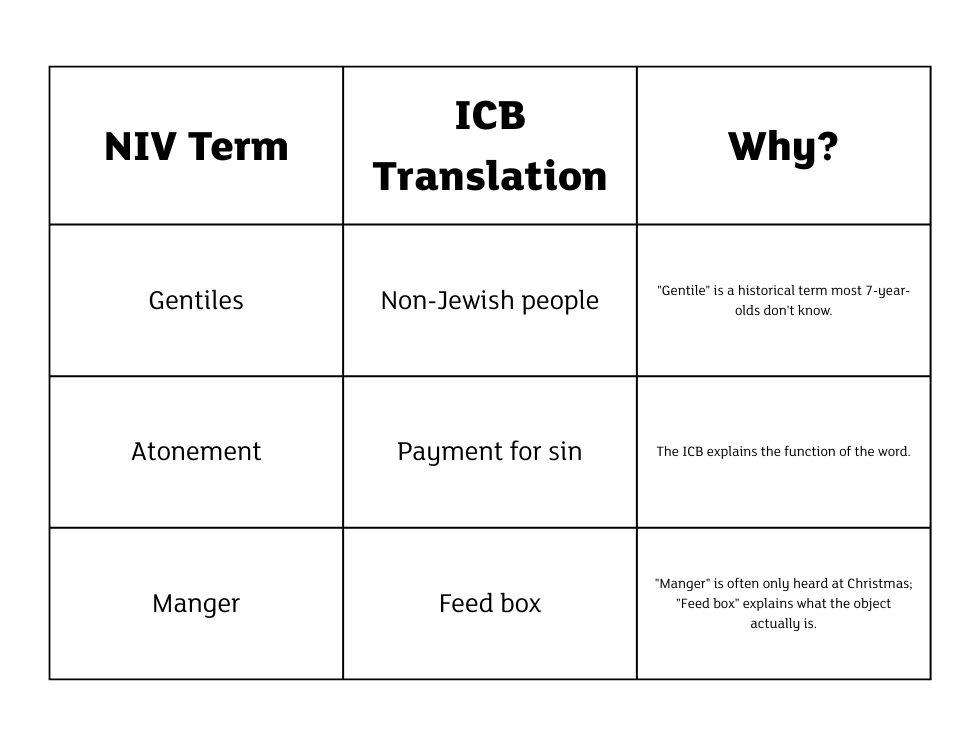
The NIV retains "Bible words" that are rich in meaning but hard for kids to understand. The ICB acts as a built-in interpreter.
4. Which one should you buy?
Choose the ICB if:
- Your child is aged 6–10.
- They are just starting to read independently (early readers).
- You want them to read the Bible on their own without needing to ask "What does this word mean?" every few sentences.
- You want a Bible for bed-time reading that flows easily.
Choose the NIV if:
- Your child is aged 11+ (Secondary School).
- They are strong readers who are comfortable with chapter books.
- They want to follow along in church (most churches use the NIV, so the wording will match the sermon).
- You want a Bible they will keep into adulthood.
Summary
Think of the ICB as a bridge. It builds a child's confidence and love for Scripture during their formative years. Think of the NIV as the destination, the Bible they will likely graduate to once they are ready for deeper study.