Trustpilot
How to Choose a Children's Bible Translation
Confused by NIrV, ICB, and Storybooks? Our simple guide helps you choose the perfect Bible for your child's reading age. Shop with confidence

Choosing a Bible for a child can be tricky. If you pick one that is too advanced, it might stay on the shelf gathering dust. Pick one that is too young, and they might feel patronised.
The most common question we get is: "What is the difference between all these versions?"
Does your child need a Storybook (a retelling of the best bits) or a Full-Text Bible (every single word from Genesis to Revelation)? And if they are ready for the full text, which translation can they actually read on their own?
To help you decide, we’ve created a simple guide to the most popular children’s translations.
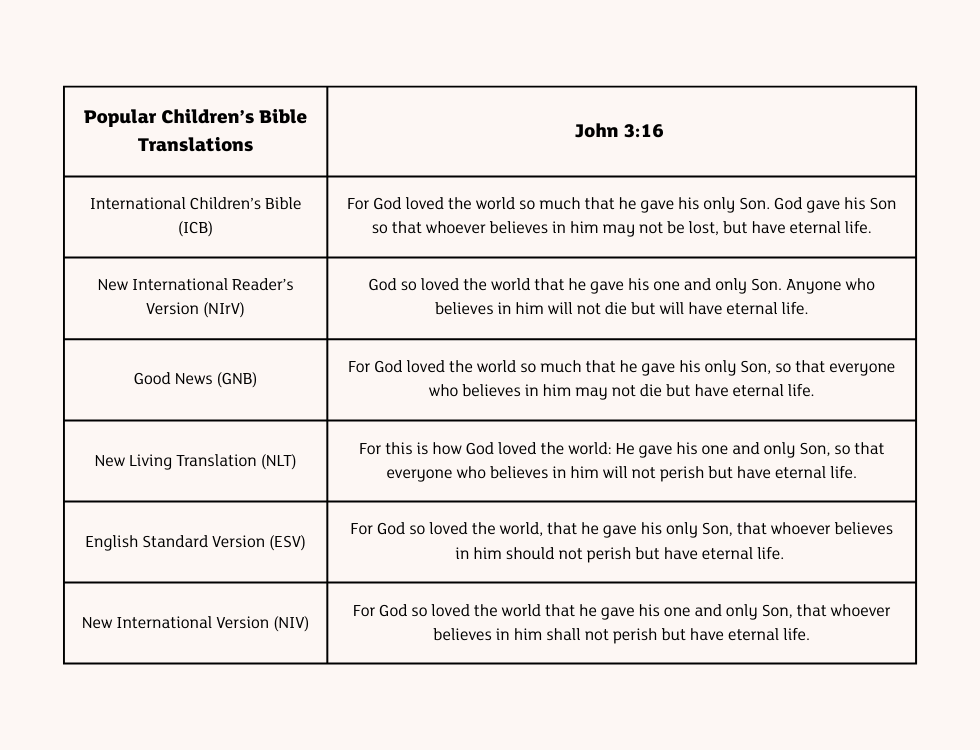
Quick Comparison Chart
See how the Bible translations compare at a glance:
1. The Starting Point: Storybook Bibles
Best for: Ages 0–5 (Toddlers & Preschoolers)
Is it a full Bible? No. What is it? These are retellings of the key stories, like Noah’s Ark, David & Goliath, and the Nativity. They are designed to be read to a child, with a heavy focus on pictures and big theological themes (like God's love or promises).
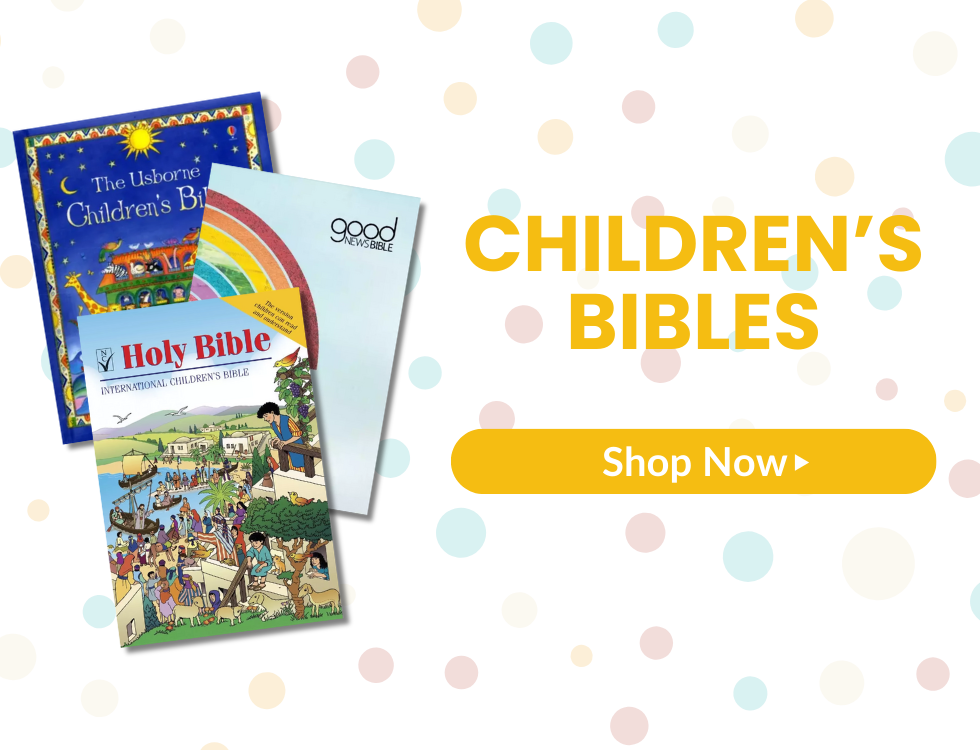
- Look for: The Jesus Storybook Bible, The Usborne Children’s Bible, or "My First Bible" titles.
- Why choose it: It builds the foundation of the faith before a child can read.
2. The ICB (International Children’s Bible)
Best for: Ages 6–9 (Early Readers)
Is it a full Bible? Yes. What is it? The ICB is unique because it is not just an adult Bible simplified: it was translated specifically for children. It uses a year 4 reading level (roughly age 8+), short sentences, and simple vocabulary. It is often the best choice for a child's very first "grown-up" Bible.
- Key Feature: "Centurion" becomes "Army Commander"; "Sepulchre" becomes "Tomb."
3. The NIrV (New International Reader’s Version)
Best for: Ages 6–10 (The "Stepping Stone")
Is it a full Bible? Yes. What is it? Think of the NIrV as the "younger sibling" of the famous NIV (New International Version) used by adults. It keeps the accuracy of the NIV but breaks long sentences into shorter ones and simplifies the words.
- Why choose it: It seamlessly transitions a child into the adult NIV when they get older.
4. The GNB (Good News Bible)
Best for: Ages 8–12 (Schools & Sunday Schools)
Is it a full Bible? Yes. What is it? A classic in UK schools. The Good News Bible is a "dynamic equivalent" translation, meaning it focuses on getting the meaning across clearly rather than sticking word-for-word to the original structure. It also features the famous engaging line drawings.
- Why choose it: It feels familiar to children who use it in school assemblies or RE classes.
5. The NLT (New Living Translation)
Best for: Ages 9–13 (Independent Readers)
Is it a full Bible? Yes. What is it? The NLT reads like a modern novel. It is incredibly flowing and conversational. While the vocabulary is slightly higher than the ICB or NIrV, it is excellent for older children who want to read the Bible in large chunks without getting stuck on clunky phrasing.
6. The ESV & NIV (Standard Editions)
Best for: Ages 11+ (Pre-Teens)
Is it a full Bible? Yes. What is it? These are the standard "Adult" translations. By age 11 or 12, many children are ready to graduate to the version their parents or church use.
- ESV (English Standard Version): More literal and poetic.
- NIV (New International Version): Balanced and widely used.
Summary: Which One Do I Buy?
- Under 5? Buy a Storybook (Focus on pictures).
- Just starting to read (6-8)? Buy an ICB or NIrV (Focus on short sentences).
- Confident reader (9+)? Buy a NLT or GNB (Focus on flow).
- Pre-Teen (11+)? Buy a NIV or ESV (Focus on study).