Trustpilot

The ESV in short
The ESV (English Standard Version) is an essentially literal Bible translation first published in 2001 by Crossway. It was developed from the Revised Standard Version (RSV) and is designed to stay as close as possible to the wording and structure of the original Hebrew, Greek, and Aramaic texts while remaining readable in contemporary English. The ESV contains all 66 books of the Protestant Bible. A separate Catholic Edition (ESV-CE) includes the deuterocanonical books. The ESV has been revised three times since its original publication: in 2007, 2011, and 2016, when Crossway published the Permanent Text Edition. It is written at approximately a 10th-grade reading level and is widely used in UK churches, seminaries, and for personal study.
“Essentially literal” is the defining phrase of the English Standard Version (ESV) translation of the Bible. The ESV steers itself as closely as possible to original manuscripts making it a Bible of choice for many students, scholars, teachers and preachers. First published in 2001 by the American Christian publisher Crossway, the ESV Bible is itself an update of the Revised Standard Version of the Bible.
Offering remarkable depth and literary complexity, the ESV Bible is an illuminating translation for personal study as well as public reading.
History of the ESV
Every Bible translation arises out of a need. For the ESV Bible, that need was for a more literal Bible translation. A version for leaders and scholars that aligned with the language and understanding of today. But, before the ESV, and providing the foundation for its very creation, there was the Revised Standard Version (RSV) of the Bible.
First published in 1952, the RSV was designed as a literally accurate Bible in modern English. It also had the goal of carrying over the famous sense of literary excellence that is often associated with the King James Bible. This new update to the RSV was to be the next step in a long line of translations embracing accuracy and beauty.

Before work could begin on the ESV Bible, two things had to happen. First, the publisher needed to form a committee of scholars and overseers who reflected the beliefs and philosophies of this new Bible. Then they would need permission from the National Council of Churches in America to use the 1971 RSV as the basis for the ESV. Up to that point, the RSV was the accepted Bible for the scholarly establishment of the time. Without permission to use the RSV Bible, this project would be doomed before it even began. Fortunately, permission was granted. Crossway was ready to put their over 100-strong committee to work.
The resulting Bible was christened the English Standard Version, and in all about six per cent of the RSV was revised in the making of the ESV.
What does "essentially literal" mean?
This is the phrase Crossway use to describe the ESV's translation approach, and it is worth understanding precisely.
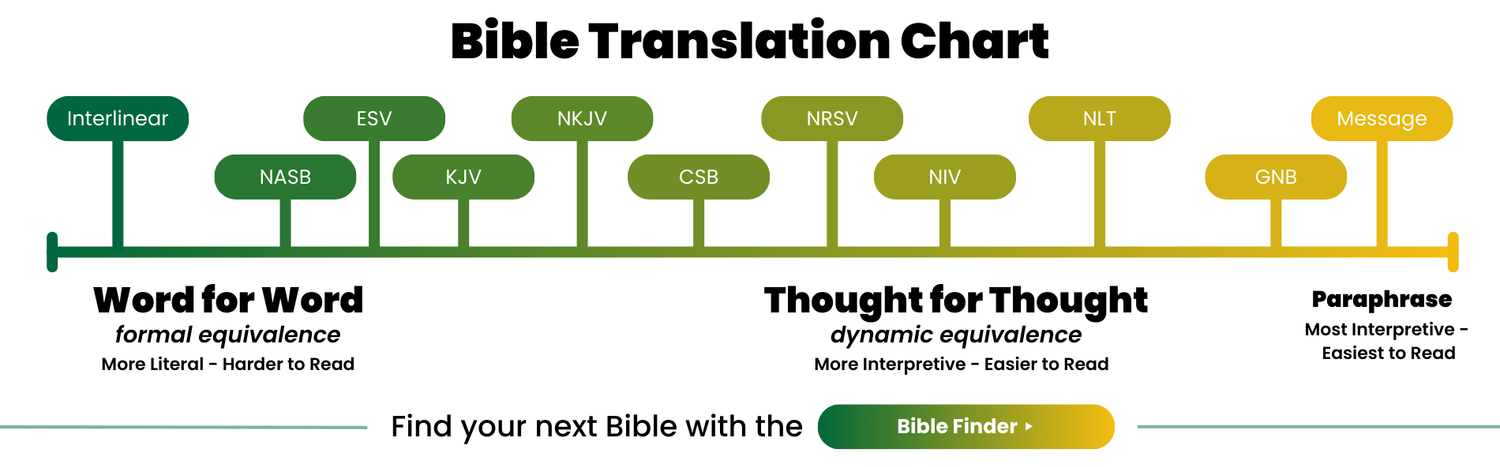
Bible translations sit on a spectrum. At one end are word-for-word translations, which stay as close as possible to the original Greek, Hebrew, and Aramaic texts. At the other end are thought-for-thought translations, which prioritise natural readability by rendering the meaning of the original rather than its precise wording.
The ESV sits firmly toward the word-for-word end without going all the way. It preserves the structure and vocabulary of the original texts as closely as modern English allows. Where a completely literal rendering would produce unreadable English, the translators made adjustments. But the instinct throughout is always toward the text, not away from it.
In practice, this means the ESV reads with more complexity and density than a thought-for-thought translation like the NIV or NLT. A single passage may require more attention. In return, readers can see more clearly the shape and rhythm of the original writing.
How Was It Translated?
When one Bible uses another as its textual basis, the first and arguably most pertinent question to be asked is how much was changed. Even six per cent of a Bible amounts to dozens of pages worth of changes made. Some of these changes include:
Two areas of the translation are worth understanding in more detail.
Gender language
The ESV takes a cautious approach to gender-inclusive language. Where the original Greek or Hebrew could refer to either a specific gender or people in general, the ESV tends to avoid defaulting to masculine language unless the masculine meaning is clear. The Greek word anthropoi, for example, can mean "men" specifically or "people" in general. The ESV will use "people" where the context supports it and "men" only where the masculine intent is unambiguous.
Denominational character
Because the translation committee was predominantly Protestant, the ESV reflects Protestant textual and theological instincts. Several RSV passages that had been disputed by conservative Protestant scholars were revised in ways that align more closely with Protestant readings. This is relevant context for Catholic readers, who are better served by the ESV-CE.
Looking for more insight into the range of Bibles available today? Our FREE 97-page eBook 'How to Choose Your Bible' offers a deeper look at everything you need to know about the Bible.
How Accurate is the ESV Bible?
As mentioned, the ESV is described as being "essentially literal", but how far from literal is that?
Before answering, it helps to know two key terms used when discussing how accurate a Bible is. Whenever someone discusses Bible Translation accuracy, they will most likely draw a line in the sand between Bibles which are “word-for-word” and Bibles which are “thought-for-thought”.
Word-for-word Bibles present as directly as possible the text in the original scriptures. As the scriptures come from a culture far removed from our own, their texts are harder to understand and so any direct translations themselves require of the reader a sharp eye and working knowledge of the context from which the Bible came.
Thought-for-thought Bibles operate under a different approach. They employ a greater level of textual interpretation throughout their translation process. This includes taking in wider contexts and meanings as a guide to what the original text meant and how that text would appear in today’s language.
If word-for-word is akin to Google Translate, operating with as little human interpretation as possible, then thought-for-thought is like a poem translated from another language, where meaning and form carry greater emphasis.
But where does the ESV Bible sit on the spectrum?
As stated, the ESV hews as close to word-for-word as possible without losing the readability of the intent of the original text. Because there is a great difference between the grammar, syntax and even the more idiomatic and local quirks of ancient writing, some updating is necessary for creating a modern English translation. This necessity creates tension for translators. Where the ESV settles is in always maintaining literary excellence and clarity whilst drawing as close as possible to the original words. It's Essentially Literal.
How Easy is the ESV to Read?
The ESV is written at approximately a 10th Grade reading level, meaning most readers from around age 15 upward can engage with the text confidently.
This is higher than the NIV (approximately 8th Grade) and significantly higher than the NLT (approximately 6th Grade). It is lower than the KJV, which uses Early Modern English vocabulary that many contemporary readers find genuinely challenging.
For readers who are new to the Bible, or who find the ESV requires effort, the NLT is worth considering as a companion. Many serious Bible readers use the ESV as their primary text and reach for the NLT or NIV when they want a quicker, more immediate reading.
What determines this level is the total number of unique words and sentences, as well as sentence length and the length of the words themselves. Other grammatical features also carry weight in the score. The reading level doesn’t take into account any understanding of history and context. Just the words and grammar of the text.
As an example, this sentence you are currently reading would score at a Grade Nine on the readability test.
This sentence would be at Grade Two.

ESV vs NIV: What is the difference?
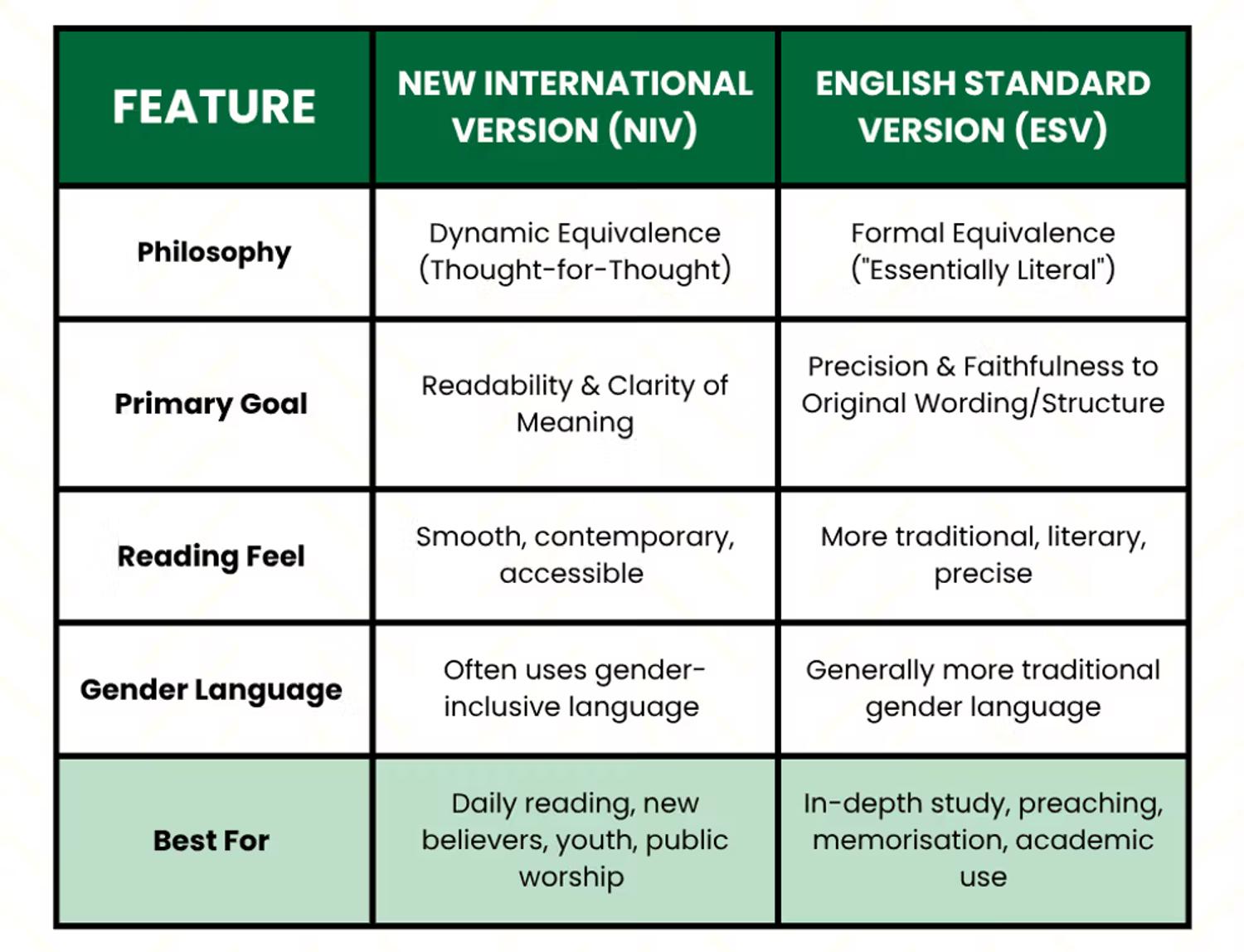
This is the most common comparison question, and it comes down to translation philosophy.
What books does the ESV Bible contain?
The ESV contains all 66 books of the Protestant Bible: 39 books in the Old Testament and 27 in the New Testament.
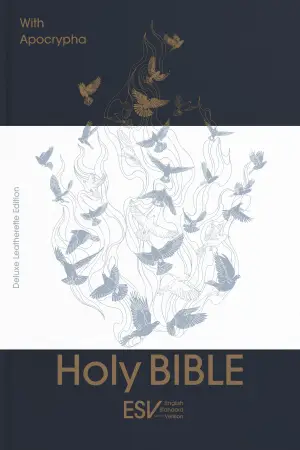
The Old Testament follows the standard Protestant canon, which does not include the deuterocanonical books (sometimes called the Apocrypha) accepted by the Catholic Church. A separate ESV Catholic Edition (ESV-CE) does include those books, arranged according to Catholic canonical order. More on that below.
Common Uses
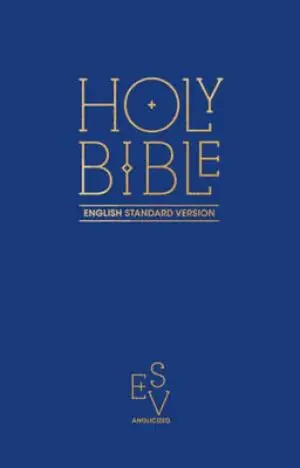
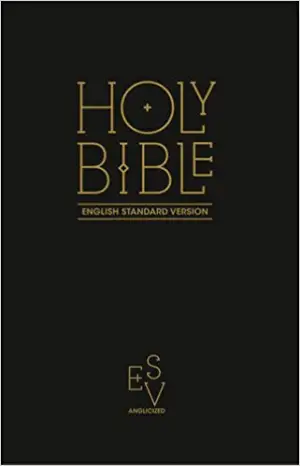
First and foremost, the ESV has been embraced by Christian scholars and theologians. That doesn’t mean that it's cordoned off to the wider Christian readership. Not by a long stretch. Its written richness has lifted the ESV up to the position of being a well-loved Bible for many in the English-speaking world. It has even become the translation of choice for many UK Churches. This in part due to an Anglicised edition of the ESV Bible published by HarperCollins.
Different Editions
As mentioned, the ESV Bible itself is a revision of the RSV Bible (which was, in turn, a revision of the American Standard Version Bible from 1901). Since it’s release, though, it has undergone three notable revisions since its release in 2001.
The first one was in 2007, and it was only a minor revision. All in all, it changed about 500 words to better improve the clarity of meaning, and for greater grammatical consistency. The same again for the 2011 revision, which built upon the changes made four years prior and was done to a similar effect.
In 2016, four years after the last revision, Crossway made one more update that changed 52 words in the text. They titled this revision the "ESV Permanent Text Edition". Since then, minimal changes to the text have been made, but not as a formalised revision. Just minor tweaks.
Example verses from the ESV Bible
For God so loved the world, that he gave his only Son, that whoever believes in him should not perish but have eternal life. (John 3:16)
For I know the plans I have for you, declares the Lord, plans for welfare and not for evil, to give you a future and a hope. (Jeremiah 29:11)
Be kind to one another, tenderhearted, forgiving one another, as God in Christ forgave you. (Ephesians 4:32)
These verses illustrate the ESV's register: more formal than the NIV or NLT, but fully readable without the archaic vocabulary of the KJV.
Which ESV Bible should you buy?
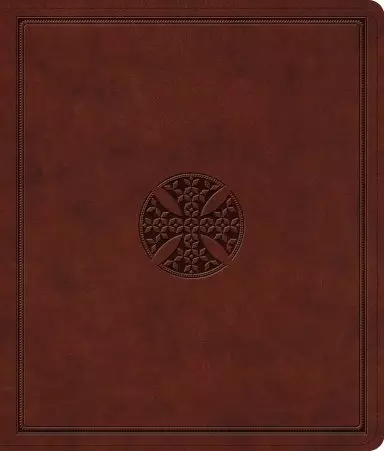
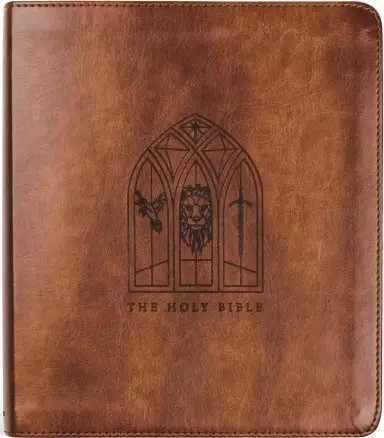
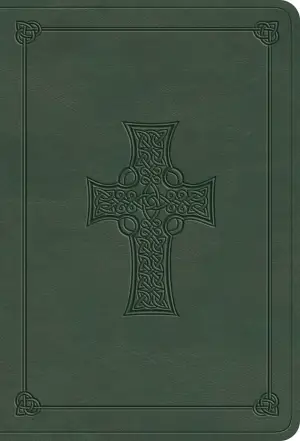
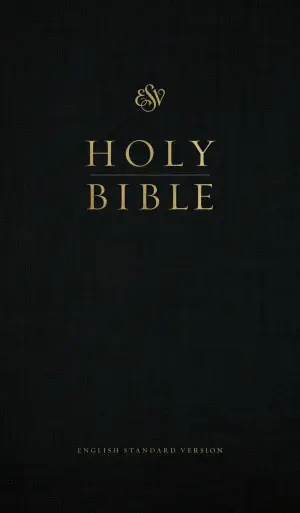
The ESV is available in a wide range of editions. Here are the most significant categories.
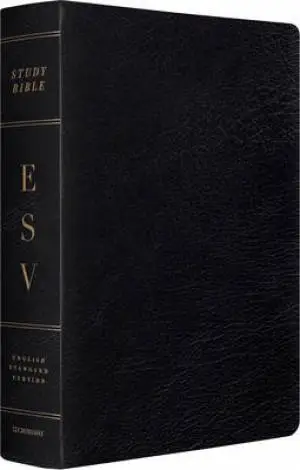
For study The ESV Study Bible is the flagship. It includes over 20,000 notes, 200 full-colour maps, and extensive introductions to every book. It is one of the most comprehensive single-volume study Bibles in print. For those who want a lighter study edition, the ESV Student Study Bible is well regarded.
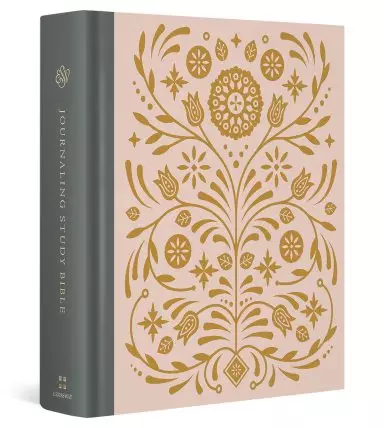
For journaling, the ESV Journaling Bible range includes wide-margin and interleaved editions, with the Hosanna Revival and Wonder Journaling Bible among the most popular. For maximum writing space, the ESV Spiral-Bound Journaling Bible opens fully flat and offers a full blank page opposite every page of text.
For everyday reading, Crossway's Thinline and Compact editions are the most portable options. For a beautifully typeset reading experience, the ESV Reader's Bible removes chapter numbers, verse numbers, and footnotes to present the text as continuous prose.
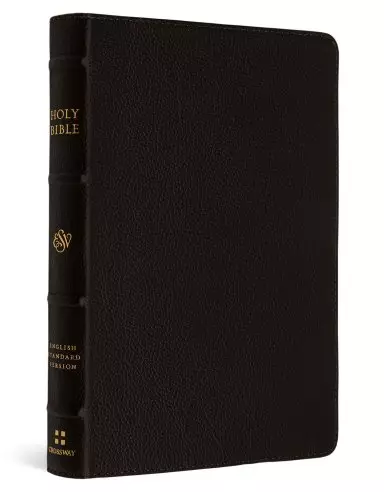
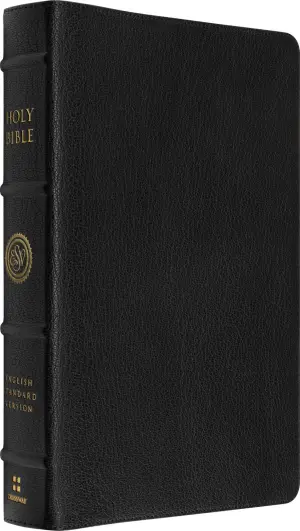
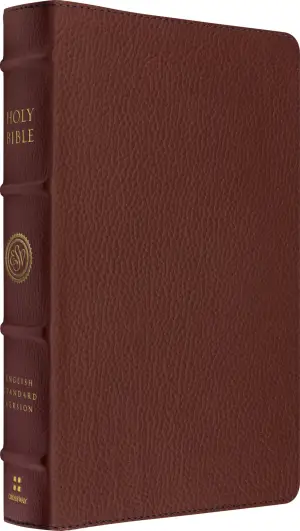
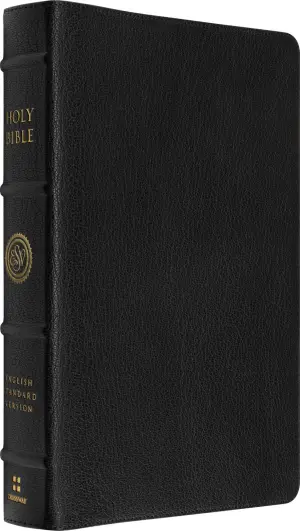
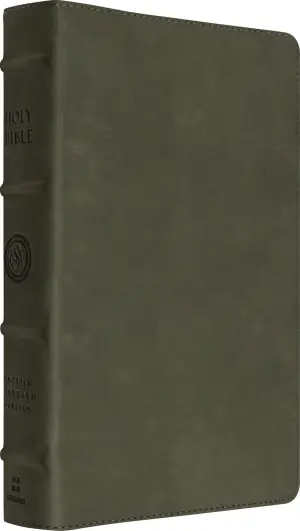
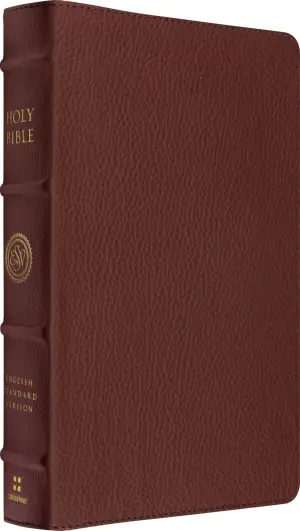
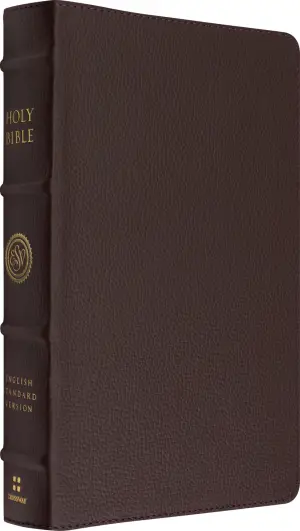
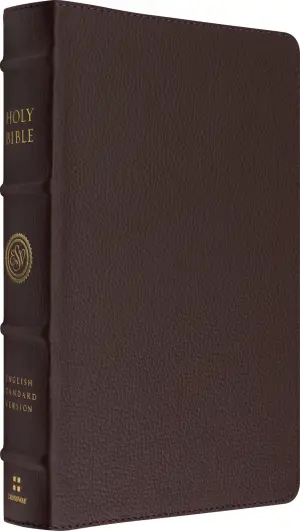
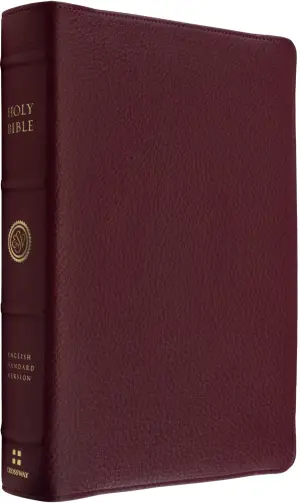
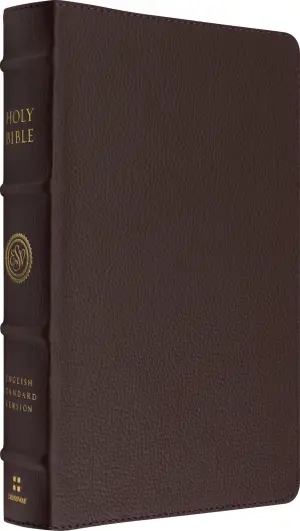
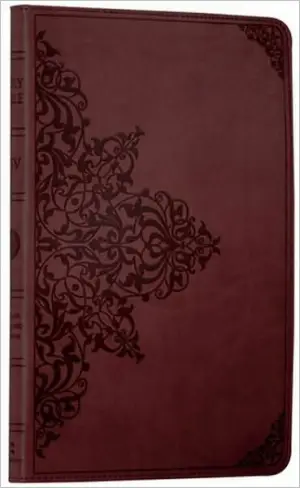
For investment, Crossway's Heirloom range in genuine leather and goatskin uses Smyth-sewn bindings and India paper for a Bible built to last decades of daily use.
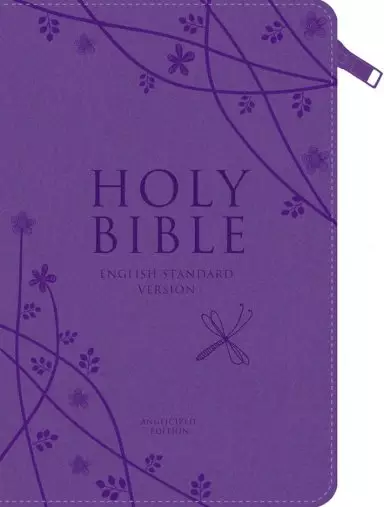
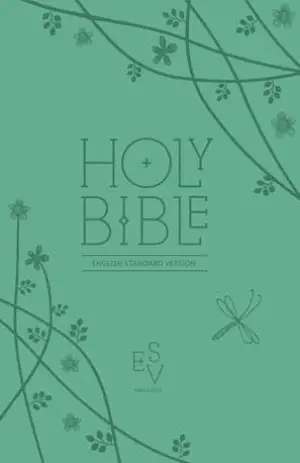
UK editions Anglicised editions of the ESV use British English spelling and phrasing throughout. Eden stocks the full Anglicised range, dispatched from our UK warehouse.
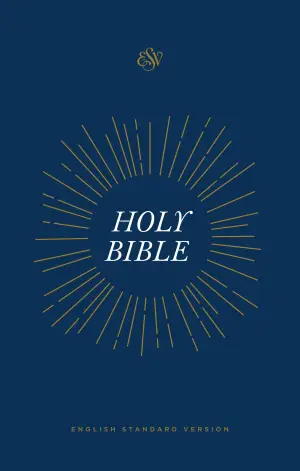
ESV Economy Bible An affordable paperback edition of the complete ESV Bible, this Economy version is the ideal choice for outreach or to try the text for yourself. It includes a 40-day reading plan, introductions to the two testaments and a “Why Read the Bible?” article for newer Christians.
Frequently Asked Questions
Every day, people turn to the Bible for questions about faith, life, meaning, Christianity and countless other topics. But as well as having questions for the Bible, there are also many questions asked about the Bible. Here we’ll answer some of the most asked questions.
What does ESV stand for? ESV stands for English Standard Version. It is an essentially literal translation of the Bible first published in 2001 by Crossway.
What does "essentially literal" mean? It means the ESV stays as close as possible to the wording and structure of the original Hebrew, Greek, and Aramaic texts while still reading naturally in contemporary English. It sits toward the word-for-word end of the translation spectrum without being mechanically literal.
Is the ESV a good Bible? The ESV is widely regarded as one of the most reliable and well-made translations available in contemporary English. It is used in many UK churches, theological colleges, and seminaries. Whether it is the right Bible for a particular reader depends on how they read and what they need it for.
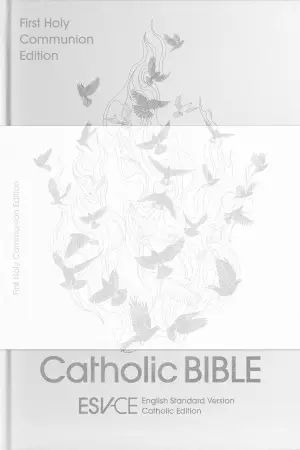
Is the ESV Bible Catholic? The standard ESV is a Protestant translation. A separate Catholic Edition (ESV-CE) includes the deuterocanonical books and is appropriate for Catholic readers.
What is the difference between the ESV and the NIV? The ESV is a word-for-word translation that stays close to the structure of the original texts. The NIV is a thought-for-thought translation that prioritises natural readability. Both are reliable; they serve different reading purposes.
Is there an Anglicised ESV? Yes. Anglicised editions use British English spelling and phrasing throughout. Eden stocks the full Anglicised range.
What year was the ESV published? The ESV was first published in 2001. It has been revised in 2007, 2011, and 2016. The 2016 Permanent Text Edition is the version in print today.
Is the ESV good for beginners? The ESV is readable but is written at a higher reading level than the NIV or NLT. Readers new to the Bible often find the NLT or NIV easier as a starting point. Many move to the ESV as they grow more familiar with the text.
Browse the full ESV Bible range at Eden or use the Bible Finder to find the right edition for your reading practice.
If you aren’t sure which Bible to get, there are a few ways we can help.
- Try the Bible Finder: We’ve put together a simple way to filter down to the perfect Bible for you. Just choose a translation, pick the features you want and select a comfortable text size. You can try the Bible Finder here.
- Read more from the Blog: We are always adding new guides, insights and articles that explore ways of understanding the different Bibles available today, as well as how to make your decision. Read our Bible posts today
- Read our Book: Over the years, we’ve explored hundreds of topics and questions about knowing which Bible to get. We’ve compiled all that information into an easy-to-read eBook that is completely free to download. Download our book “How to Choose Your Bible” today.