Trustpilot
Is the NIV Bible Accurate? (Pros, Cons & Missing Verses Explained)
What does NIV stand for? We explore the pros and cons of the New International Version, its 7th-grade reading level, and the truth about its "missing" verses.

Let’s be honest — most new Bible readers don’t realise just how many translations there are until they start looking. It’s a maze of initials: ESV, NLT, KJV, CSB…
And somewhere in that mix, one version keeps coming up: The NIV.
So what is it, who is it for, and why do millions of Christians around the world turn to it daily?
Let’s break it down.
What Is the NIV Bible?
NIV stands for New International Version. It was first published in 1978 and quickly became one of the most widely used Bible translations in the world.
Its mission? Clarity + Faithfulness.
It aims to be as close to the original meaning as possible — while still sounding natural in modern English
Think of it like this: The NIV sits in the middle between word-for-word translations (like ESV) and thought-for-thought ones (like NLT). It’s balanced, readable, and trusted.
The Pros and Cons of the NIV Bible
If you are trying to decide which Bible to buy, it helps to see where the NIV sits on the translation spectrum compared to other popular choices. Translating ancient Greek and Hebrew into modern English is incredibly difficult, and every translation has to choose between strict grammatical accuracy and easy readability.
Here are the pros and cons of the NIV compared to the alternatives:
- The ESV (English Standard Version): This is a strict "Word-for-Word" translation.
- Pros: It is incredibly accurate to the original ancient grammar.
- Cons: It can feel a bit clunky and formal to read out loud.
- The NLT (New Living Translation): This is a "Thought-for-Thought" translation.
- Pros: It reads as smoothly and conversationally as a modern novel.
- Cons: It sacrifices some strict literal accuracy to make the sentences flow.
- The NIV (The "Goldilocks" Translation): The NIV sits directly in the middle.
- Pros: It translates word-for-word whenever possible, but smoothly switches to thought-for-thought when ancient idioms wouldn't make sense in English. It is the ultimate balance of accuracy and readability.
- Cons: Strict academic scholars might prefer a purely literal translation (like the ESV or NASB) for heavy theological word-studies.
What is Wrong With the New NIV? (The "Missing Verses" Controversy)
We get a lot of questions and searches that ask some variation of: "Why is the NIV Bible missing verses?" or "What is wrong with the new NIV?"
Many people who grew up reading the traditional King James Version (KJV) open an NIV Bible and notice that a few specific verses are "missing" from the main text and have been moved to the footnotes at the bottom of the page. Some people assume the NIV translators are trying to "remove" God's word.
The Truth: The NIV translators didn't take verses out; they simply used better manuscripts than the 1611 translators had access to!
When the King James Version was translated 400 years ago, they used the best Greek manuscripts available in Europe at the time. However, in the centuries since, archaeologists have discovered incredibly ancient manuscripts (like the famous Dead Sea Scrolls) that are hundreds of years older and closer to the original source.
When the NIV translators looked at these older, more reliable manuscripts, they realised that those "missing" verses weren't actually in the original texts. They were likely margin notes added by a well-meaning scribe centuries later that accidentally got copied into the KJV! Moving them to the footnotes isn't a conspiracy; it is a commitment to the highest level of historical accuracy.
Who Is the NIV Bible Best For?
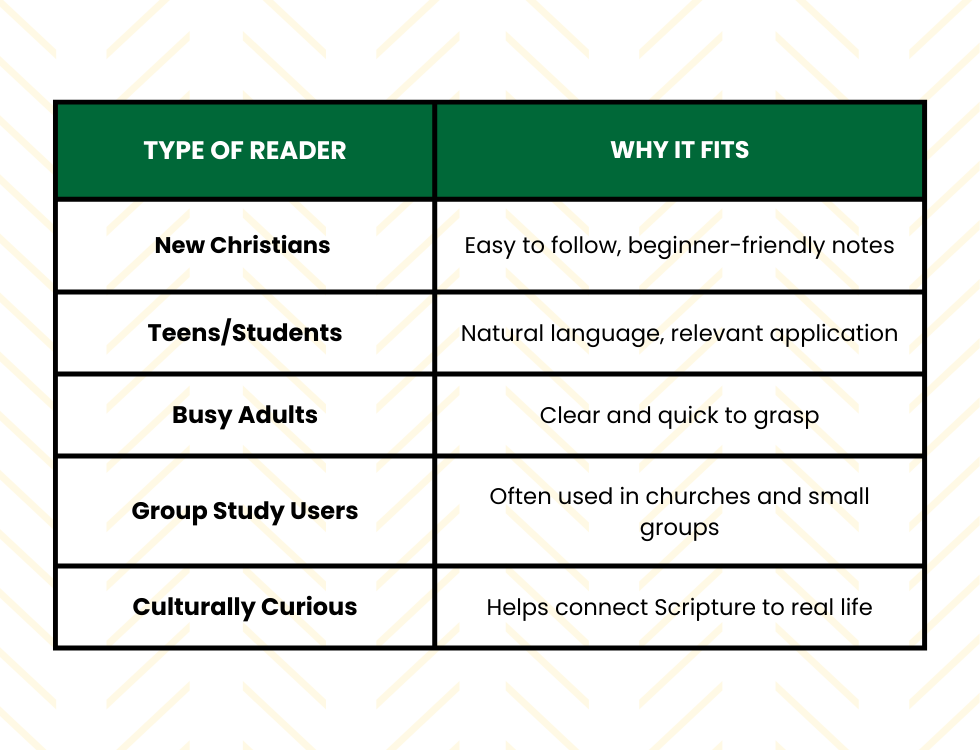
Is the NIV a Good Bible?
Yes, especially if you’re new to Scripture, returning after time away, or looking for clarity without complexity.
It may not be the most literal or poetic, but it’s one of the most approachable, well-rounded, and helpful Bibles for growing in your faith.
👉 Explore top-selling NIV Bibles at Eden.co.uk here
👉 Not sure yet? You can compare the major Bible translations here.
If you aren’t sure which Bible to get, there are a few ways we can help.
- Try the Bible Finder: We’ve put together a simple way to filter down to the perfect Bible for you. Just choose a translation, pick the features you want and select a comfortable text size. You can try the Bible Finder here.
- Read more from the Blog: We are always adding new guides, insights and articles that explore ways of understanding the different Bibles available today, as well as how to make your decision. Read our Bible posts today
- Read our Book: Over the years, we’ve explored hundreds of topics and questions about knowing which Bible to get. We’ve compiled all that information into an easy-to-read eBook that is completely free to download. Download our book “How to Choose Your Bible” today.