Trustpilot
Voted #16 by Premier Radio listeners as part of ‘The 100 Books That Changed the Church’ list curated by Premier Christianity magazine and Eden.
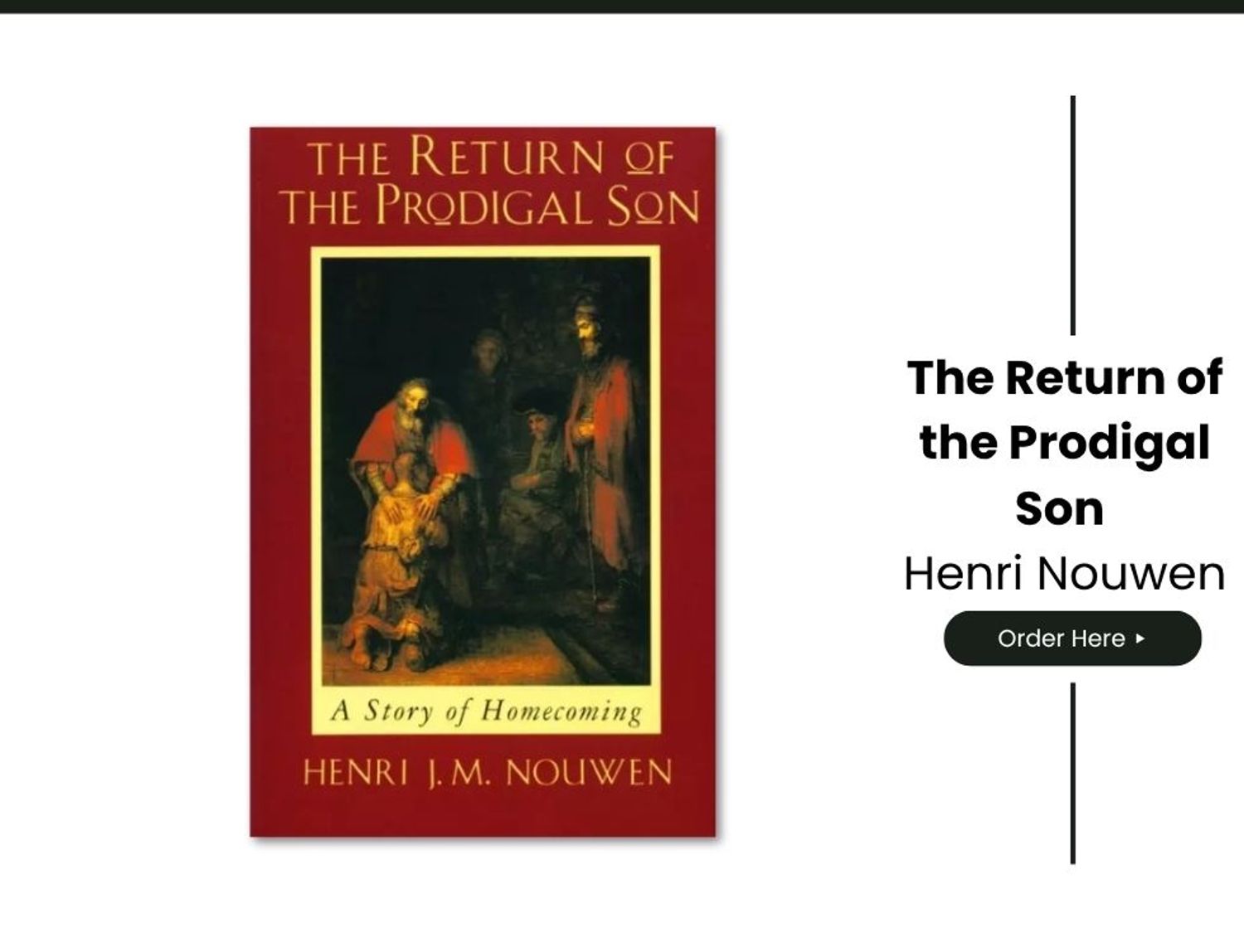
Some books emerge from ideas. This one emerged from a painting. Henri Nouwen first saw a reproduction of Rembrandt's The Return of the Prodigal Son in 1983, and stood before the original in the Hermitage in St Petersburg for several hours, unable to leave. The book that resulted is among the most profound works of Christian spirituality of the past century — and Premier Christianity's survey rightly recognises its influence on the Church.
Nouwen reflects on the parable through the lens of Rembrandt's composition, identifying three figures: the younger son who left, the older son who stayed and resented it, and the Father whose hands in the painting are famously different — one masculine and one feminine — as if to suggest a love that transcends human categories. He reflects on which figure he himself has been at different stages of his life, and invites the reader to do the same.
The book's genius is its particularity. By going deep into one image, one story, one moment of return, Nouwen illuminates something so universal about grace, shame, homecoming and fatherhood that readers across wildly different backgrounds have found themselves in its pages.
Want to know more about the full list then read our blog article here.
About the Author: Henri Nouwen (1932–1996) was a Dutch Catholic priest and prolific author who taught at Harvard, Yale and Notre Dame before spending the last decade of his life as a pastor to people with intellectual disabilities at the L'Arche Daybreak community in Toronto. His many other beloved works include The Wounded Healer, The Way of the Heart and In the Name of Jesus.