Trustpilot

How to Start Reading the Bible for the First Time
Curious about the Bible but not sure where to begin? Discover what to read first, which Bible translation to choose and simple tips for getting started.
Estimated Read Time: 5 minutes
We all come to the Bible for the first time in many different ways.
Maybe you have been thinking about purpose, relationships, forgiveness or what gives people hope. Perhaps you have come across a Bible verse that made you curious. Or maybe you simply want to understand for yourself what Christians actually believe.
Whatever brought you here, opening the Bible for the first time can feel a little daunting. It is a large book, there are lots of different versions, and it is not immediately obvious where to begin.
The good news is that you do not need any previous Bible knowledge to start reading it.
Here is a simple way to begin.
How do I start reading the Bible as a beginner?
To start reading the Bible effectively, follow these four simple steps. First, choose an easy-to-read translation like the New Living Translation (NLT) or New International Version (NIV) rather than older, complex language. Second, do not start at the beginning (Genesis); instead, start with the Gospel of Mark or John in the New Testament to learn about Jesus first. Third, read in short bursts of 10 to 15 minutes. Finally, ask simple questions as you read, such as "What does this say about God?" and "How can I apply this to my life?"
Do I need my own Bible to get started?
Not straight away.
If you are simply curious, you can begin by reading a Gospel and seeing what you make of it.
But if you would like to read regularly, having a Bible of your own can make it easier to build the habit, make notes and come back to passages that stand out.
The tricky part is knowing which one to choose.
There are lots of translations, sizes and editions, but your first Bible does not need to be complicated.
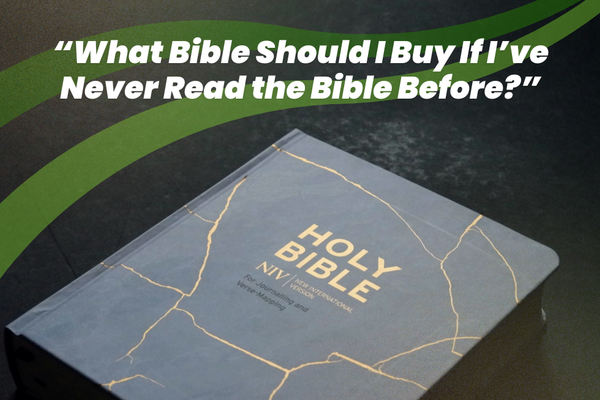
What should I look for in my first Bible?
For most beginners, four things matter.
1. A translation you can understand
Different Bible translations use slightly different approaches to putting the original Hebrew and Greek into English.
For a first-time reader, clarity is usually more important than choosing the “perfect” translation.
Two popular starting points are:
The NIV (New International Version):
The NIV uses clear, contemporary English while aiming to stay close to the meaning of the original text. It is a useful all-round choice and one you can continue using as you become more familiar with the Bible.
The NLT (New Living Translation):
The NLT uses especially natural, readable English. If your biggest concern is simply being able to understand what you are reading, it can be a very approachable first Bible.
2. A text size that feels comfortable
This sounds obvious, but it makes a big difference. A very compact Bible can be useful for carrying around, but the smaller print may not suit everyone. If you expect to do most of your reading at home, you may prefer a standard or larger text size.
Your first Bible should feel inviting to open rather than difficult to read.
3. The right amount of extra help
Some Bibles simply contain the biblical text.
Others include:
- introductions to each book;
- maps;
- reading plans;
- explanatory notes;
- cross-references;
- space for writing.
A standard Bible is often ideal if you want an uncluttered reading experience.
A study Bible may suit you if you like asking questions and want explanations close at hand.
Neither is automatically better.
Choose the one that matches how you like to learn.
4. A Bible you will actually use
You do not need the most expensive Bible or the one with the most features.
Think practically.
- Will you mainly read at home?
- Do you want something portable?
- Would notes help you, or would they feel distracting?
- Would you prefer a hardback that can take regular use?
The best first Bible is usually the one you will feel comfortable picking up again tomorrow.
Not sure? Let the Bible Finder narrow it down
If all those choices still feel confusing, you do not need to work them out on your own.
The Eden Bible Finder lets you narrow the choice by things such as:
- Bible translation;
- features;
- text size;
- binding;
- colour.
You can start with what matters most to you and reduce a very large range of Bibles to a much more manageable shortlist.
You Don't Have to Start at Page One
This is the most common mistake new readers make. They open to Genesis (page 1), read through the exciting stories of creation and Noah, and then hit the book of Leviticus. Leviticus is full of ancient laws and rituals, and this is usually where momentum dies.
Instead, we recommend starting with The Gospels.
The Gospels are the biographies of Jesus. Since Christianity is all about Jesus, it makes sense to start with his life.
- Start with Mark: It is the shortest, fastest-paced account of Jesus’ life. It is action-packed and easy to follow.
- Start with John: If you are looking for something more spiritual and reflective, John is a beautiful place to begin.
Bible Tip: Read a little, not a lot
You do not need to read several chapters every day. Start with 10 or 15 minutes.
A short section read thoughtfully is usually more helpful than racing through several pages simply to say you have read them. You might read half a chapter and then stop. The aim is not to finish the Bible as quickly as possible. It is to understand what you are reading.
Ask Three Simple Questions
You don't need to hunt for hidden codes. As you read a short passage (maybe half a chapter at a time), just ask yourself these three questions:
- What does this say about God? (Is He kind? Just? Powerful?)
- What does this say about people? (Are they struggling? Faithful? Afraid?)
- What does this mean for my life? (Is there an example to follow or a promise to trust?)
It is fine to have questions
You may come across things you agree with immediately. Other times you may find other passages confusing or difficult.
Everyone who has ever read the Bible will have felt this way.
The Bible was written across very different periods of history and contains several types of writing, so context matters. You do not have to resolve every question before moving on. Make a note of things you want to explore later.
Curiosity is a perfectly good reason to keep reading.
Should I pray before reading?
If you are exploring Christian faith, you might try a simple prayer before you begin.
It does not need to sound religious or polished.
Something as simple as:
“God, if you are there, help me understand what I am reading.”
is enough.
If you are not sure what you believe yet, that is OK too. You can still read the Bible thoughtfully and decide what you make of it.
Find Your First Bible
If you do not already own a Bible, try not to become overwhelmed by the choice.
For a first Bible, focus on a few practical things:
- Can I understand the translation?
- Is the print comfortable to read?
- Do I want explanatory notes or a simpler page?
- Will I mainly read it at home or carry it around?
- What budget feels sensible?
There is no single Bible that is perfect for every beginner.
The right choice is the one you will actually feel comfortable opening.
Ready to choose your first Bible?
You don't need to know everything about translations or Bible features. Tell us what matters to you and we'll help narrow down the choices.
Our Bible Finder tool allows you to select "Easy to Read" as a preference, so you can find a Bible that welcomes you in rather than pushing you away. Choose an accessible translation, comfortable text size and only the features you know you will use.