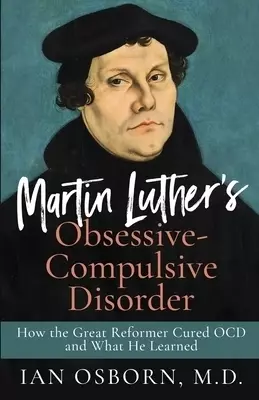
Obsessive-Compulsive Disorder (OCD) is a relentless condition, the primary symptom being the occurrence of terrifying ideas, images, and urges that jump into a person's mind and return again and again, despite the individual's attempt to remove them. Christians who suffer from OCD may grapple with additional guilt, as the undesired thoughts are frequently of a spiritual nature.
Many might be surprised to learn that some of the greatest leaders in Christian history may have also struggled with this malady and that this struggle may have contributed to Christian beliefs and practices. Psychiatrist Ian Osborn shares the personal accounts of Martin Luther, John Bunyan, and Saint Therese of Lisieux, revealing what they experienced, how they coped, whether they were able to overcome their tormenting and often violent obsessions, and where God fit into the picture. He also shares his own story as he explores how faith can play an important role in bringing relief to OCD sufferers.
Can Christianity Cure Obsessive-Compulsive Disorder? offers a proven and effective method for coping with OCD, providing hope for patients, families, and Christian pastors and counselors.
OCD is listed among the top 10 most debilitating illnesses by the World Health Organisation in terms of loss of income & decreased quality of life
OCD is thought to affect 2-3% of the UK population
About 1 in every 50 people suffer from OCD at some point in their lives
OCD affects all age groups, usually starting in childhood

 Life giving resources. Faithfully delivered.FREE delivery on orders over £10
 Serving over 2 million Christians in the UKwith Bibles, Books and Church Supplies
 Our Buy-Now-Pay-Later accounts usedby over 16,000 UK Churches & Schools
 Excellent 4.8 out of 5
 Trustpilot



![Can Christianity Cure Obsessive-Compulsive Disorder? [eBook]](https://www.eden.co.uk/images/300/9781585580170.webp)